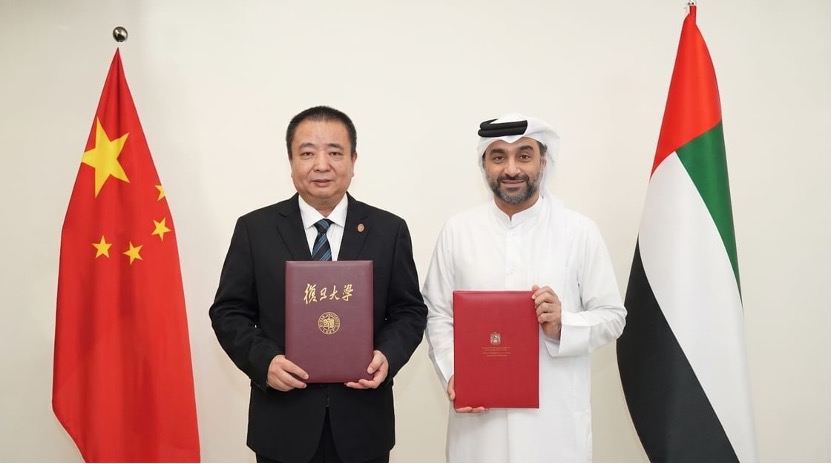
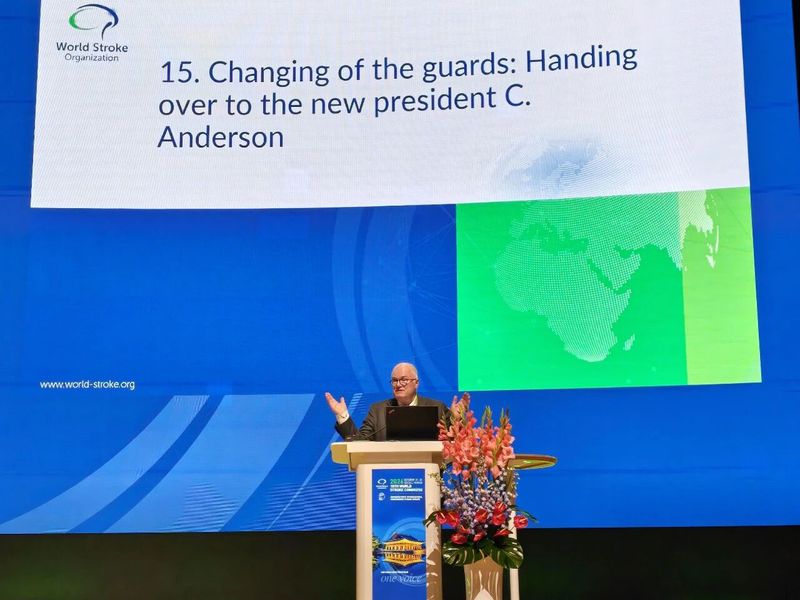
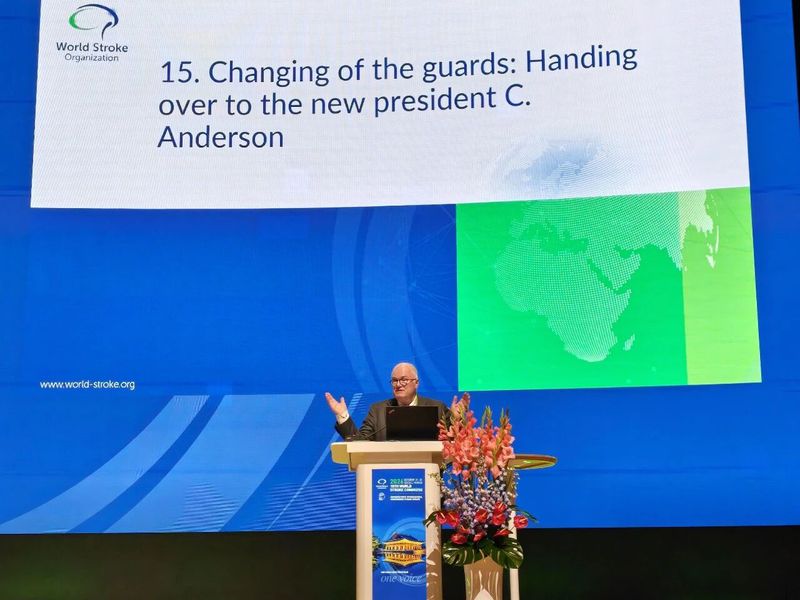
Professor Craig S. Anderson, distinguished professor at Fudan’s Institute of Science and Technology for Brain-Inspired Intelligence (ISTBI), was officially inaugurated as President of the World Stroke Organization (WSO) during the 18th World Stroke Congress, held in Seoul, South Korea, from October 21 to 23. He will serve a two-year term through 2028, after two years as President-Elect.
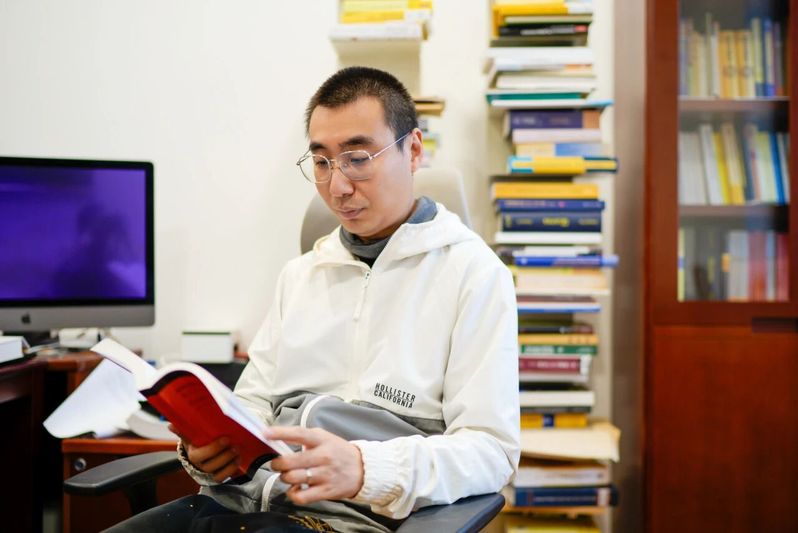
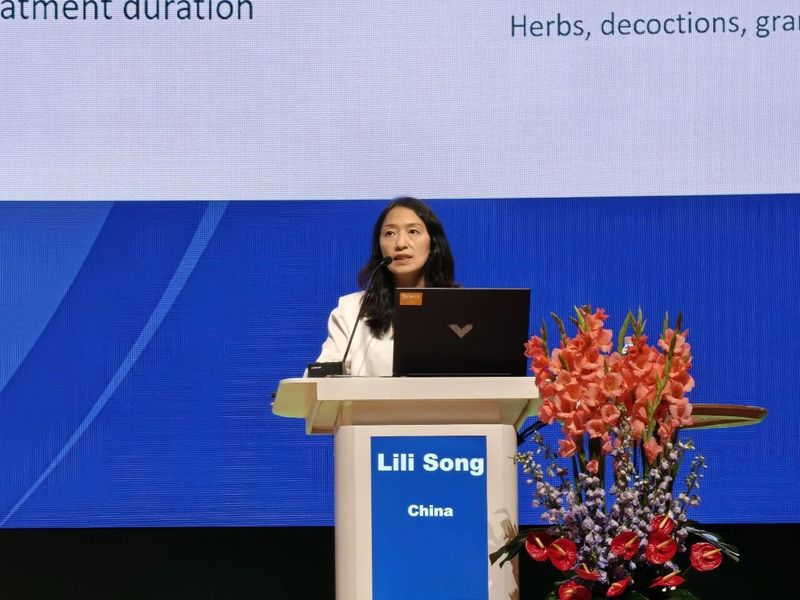
Meanwhile, a team led by Professor SONG Lili, executive director of ISTBI’s Center for International Clinical Trial and Translational Medicine, presented the latest evidence from the INTERACT and ENCHANTED research programs — including four late-breaking presentations on the Congress main stage — covering blood-pressure management in stroke and evidence-based research on traditional Chinese medicine for intracerebral hemorrhage.
The high-profile leadership appointment and research presentations underscore a shift in which China-based trials are increasingly shaping global evidence.
A Global Leader in Stroke Research
The World Stroke Congress is one of the largest and most academically prestigious annual meeting in the field, bringing together clinicians, researchers, and public-health policymakers from around the world. This year’s Congress featured keynote lectures, specialized forums, and late-breaking research sessions spanning prehospital care, acute reperfusion, and blood-pressure and critical-care management.
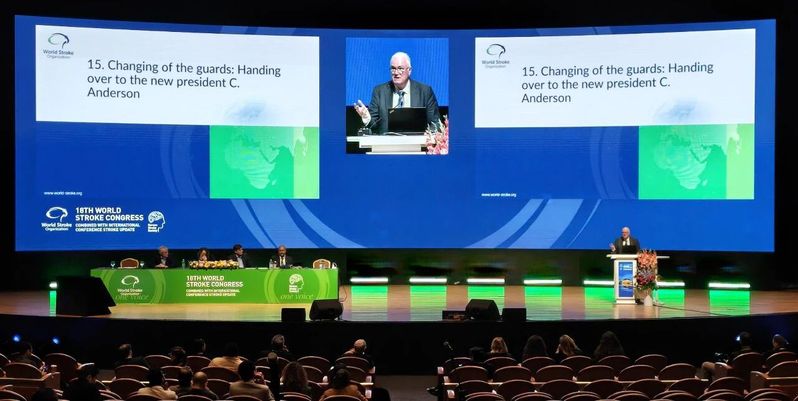
Professor Anderson is an internationally recognized authority on clinical research in stroke and cardiovascular disease — described by The Lancet as a “front runner in stroke research” and consistently listed among Stanford University’s “World’s Top 2% Most-Cited Scientists”. He is a Fellow of the Australian Academy of Health and Medical Sciences, has long led the Brain Health Program at The George Institute for Global Health, and served as Professor of Neurology and Epidemiology at the University of New South Wales. He is Editor-in-Chief of Cerebrovascular Diseases and Associate Editor of the International Journal of Stroke. In 2024, he joined Fudan University full-time as a distinguished professor at ISTBI, where he directs the Center for International Clinical Trials and Translational Medicine.
Over the past two decades, Professor Anderson has built a global network of multicenter randomized controlled trials and population-based registries. His landmark trials in blood-pressure management for acute intracerebral hemorrhage and acute ischemic stroke have reshaped clinical practice worldwide. He has published more than 700 papers, including over a dozen as corresponding author in The New England Journal of Medicine and The Lancet.
The INTERACT Series: A “Chinese Solution” That Changed International Guidelines
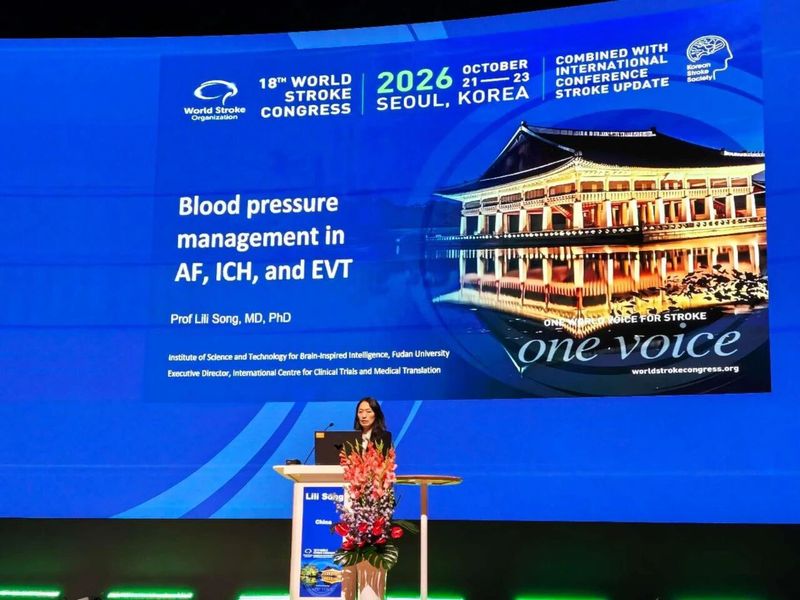
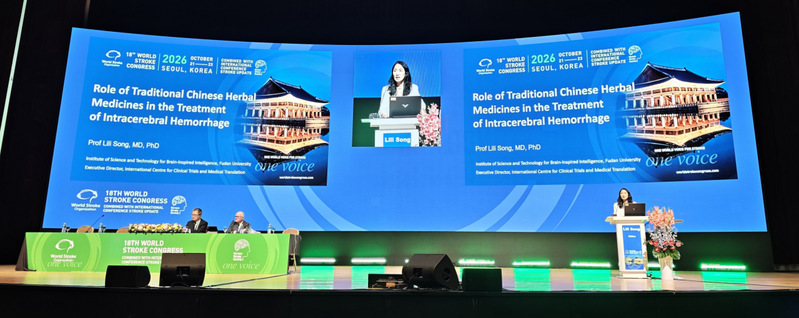
At the Congress, Professor Song delivered two main-stage presentations, tracing a decade of research through the lens of “evidence, controversy, and next steps” — and repeatedly asking why the same intervention produces different outcomes across populations, time windows, and hemorrhage locations.
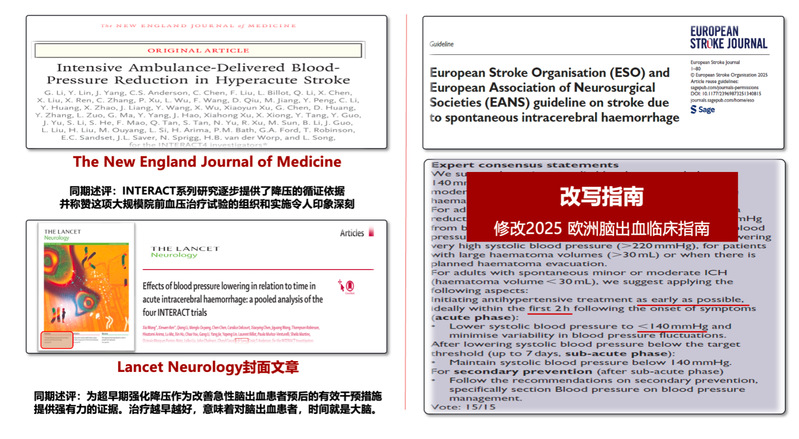
The INTERACT series, jointly advanced by the Anderson–Song team, forms the backbone of the evidence on blood-pressure management in acute intracerebral hemorrhage (ICH):
INTERACT and INTERACT2 first demonstrated that early intensive blood-pressure lowering in acute ICH is safe and may improve functional outcomes, prompting guidelines in China, Europe, and the United States to shift from “watchful waiting” to early, smooth blood-pressure control.
INTERACT3, a stepped-wedge cluster-randomized trial across multiple countries, embedded protocolized blood-pressure management into a comprehensive care package for acute ICH — the largest trial of its kind in stroke to date and the first comprehensive management study in ICH to achieve a definitively positive result, providing top-level evidence for moving guidelines from single-target control to bundle-based care.
INTERACT4 moved the intervention even earlier — into the ambulance. Conducted with 51 hospitals and two ambulance systems across eastern and western China, the trial enrolled patients with suspected stroke and elevated blood pressure within two hours of onset. For hemorrhagic stroke, prehospital blood-pressure lowering reduced the risk of death and disability by approximately 25%; for ischemic stroke, however, the results suggested potential harm. The findings were published in The New England Journal of Medicine (2024).
A pooled analysis of all four INTERACT trials further showed that the benefit of blood-pressure lowering diminishes as time from onset increases, with the greatest benefit within three hours — sharpening the treatment window from “within hours” to precisely which hours. The results were published in The Lancet Neurology (2025).
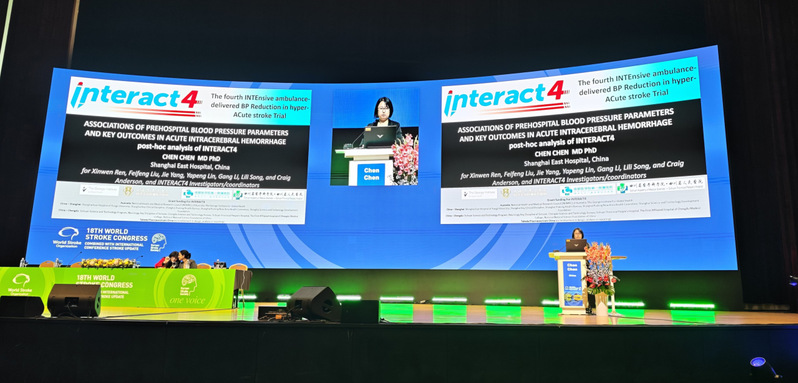
Junior researchers and collaborating scholars from the team also presented re-analyses addressing who benefits most and how to target treatment more precisely: a pooled individual-participant-data analysis of the INTERACT trials and ATACH-2 (11,288 patients) showed that the benefits of intensive lowering differ between deep and lobar hematomas — meaning clinical decisions must consider not just hematoma size but location; and a post-hoc analysis of INTERACT4 examined how prehospital blood-pressure levels and reduction magnitudes relate to key outcomes, filling in operational details for “managing blood pressure from the moment the ambulance arrives”.
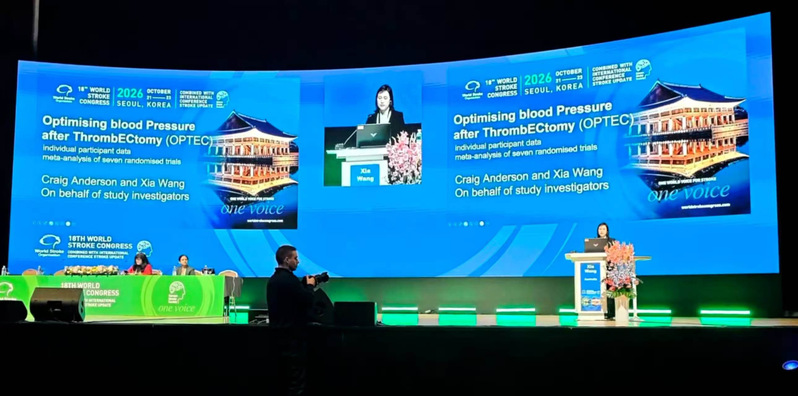
The team also reported findings from the OPTEC project, built on the ENCHANTED2/MT research program. The ENCHANTED2/MT trials, published in The Lancet in 2022, found that after successful endovascular thrombectomy, more intensive blood-pressure lowering worsened outcomes rather than helping. To test whether that finding generalizes across populations, the team pooled individual data from seven randomized trials, upgrading a single-trial conclusion into a broadly applicable one that has informed European and American guidelines in 2026.
Traditional Chinese Medicine for ICH: From Experience to Evidence
Professor Song also presented the team’s long-running effort to place traditional Chinese medicine (TCM) for intracerebral hemorrhage on an evidence-based footing — an area long characterized internationally as “rich in practice, poor in evidence”. In 2026, this research direction was awarded a National Science and Technology Major Project, which is now steadily advancing.
The completed CHAIN trial — a randomized, double-blind, placebo-controlled study of a TCM oral formulation involving 26 hospitals and 1,648 patients — was published in The Lancet (2024). A pivotal methodological achievement was the team’s development of a placebo matched to the active drug in color, texture, and smell, which peers have hailed as a key breakthrough in the methodology of TCM clinical trials.
Building on CHAIN, the team has launched CHAIN2 and the CALM trial, the latter testing Angong Niuhuang Wan (a classical TCM formula) in 1,100 patients with acute spontaneous ICH across multiple centers in China. As Professor Song emphasized in her presentation, the value of TCM research lies not merely in verifying whether a particular formula works, “but in establishing a methodology that allows traditional medicine to stand up to modern scientific scrutiny”.
From Fudan to the World
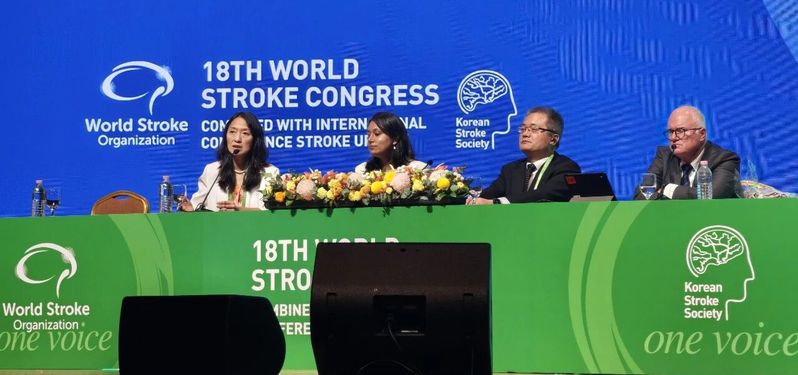
Stroke remains a leading cause of death and disability worldwide. China records millions of new stroke cases each year, with a markedly higher proportion of hemorrhagic stroke than in Europe or North America — and patients who are younger, with worse prognoses. Randomized trials conducted in China therefore carry public-health significance far beyond any single publication.
Supported by ISTBI’s Center for International Clinical Trials and Translational Medicine, the Anderson–Song team will continue to bring global multicenter studies to China and carry their findings to the world through publications, guidelines, and standards. By integrating brain–computer interfaces, big data, and AI-based models into translation, the team aims to build replicable, scalable pathways of emergency stroke care — filling critical gaps, improving international guidelines, and bringing Chinese treatment solutions to the world.
(END)
Source: Institute of Science and Technology for Brain-Inspired Intelligence
Writer: WANG Mengqi
Editor: LI Yijie